Red Homestead is built on a long, real history — the way new land has been claimed, settled, documented and eventually recognized, from the colonial coast to the wild west to the Amazon frontier. These are our long-reads on that lineage, and on what it means for a claim made today on the Moon and Mars.
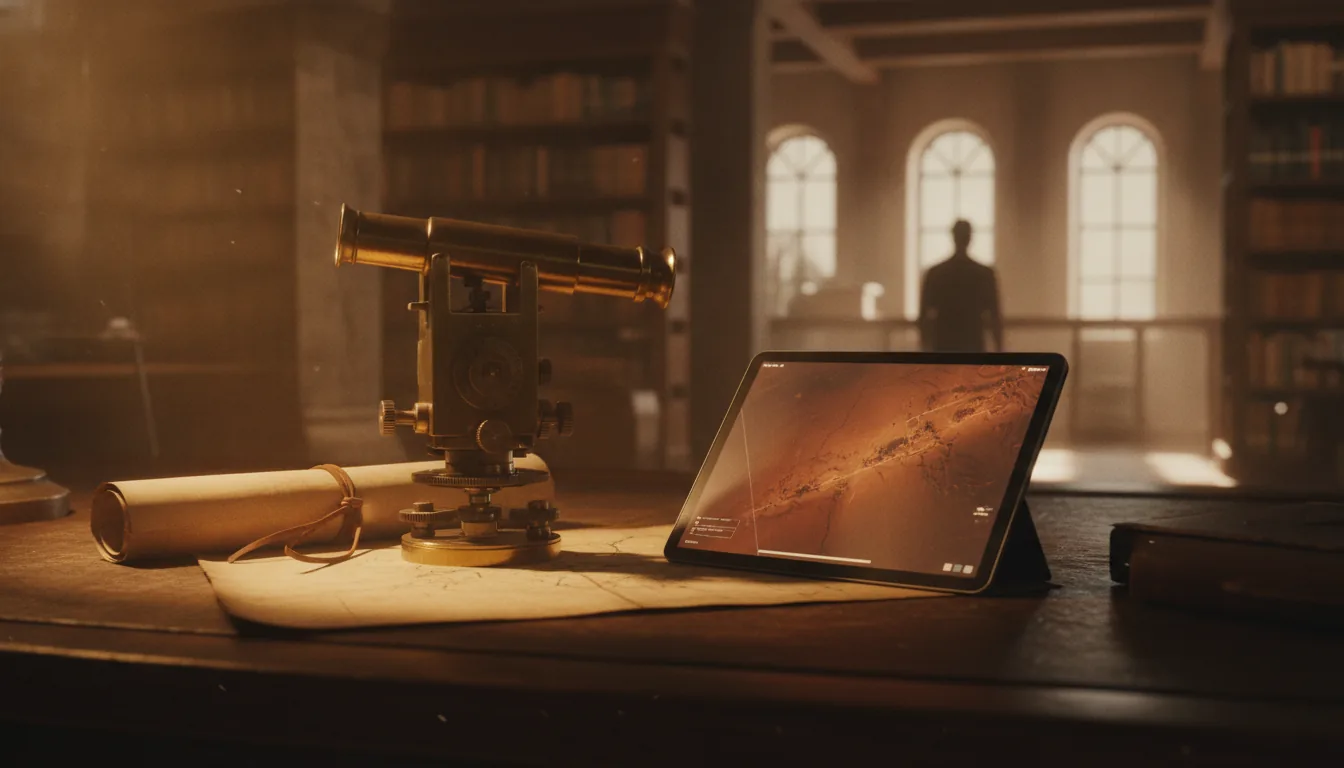
A 6,000-word history of how people have claimed and owned frontier land: the Crown grants of the east coast, the Spanish ranchos of the west, the homestead and mining rules of the wild west, Florida's armed occupation, the “acts of possession” that came before paper deeds, and the Amazon frontier today — and the single thread that ties them to an honest claim off-world.
Living off Mars · ISRU
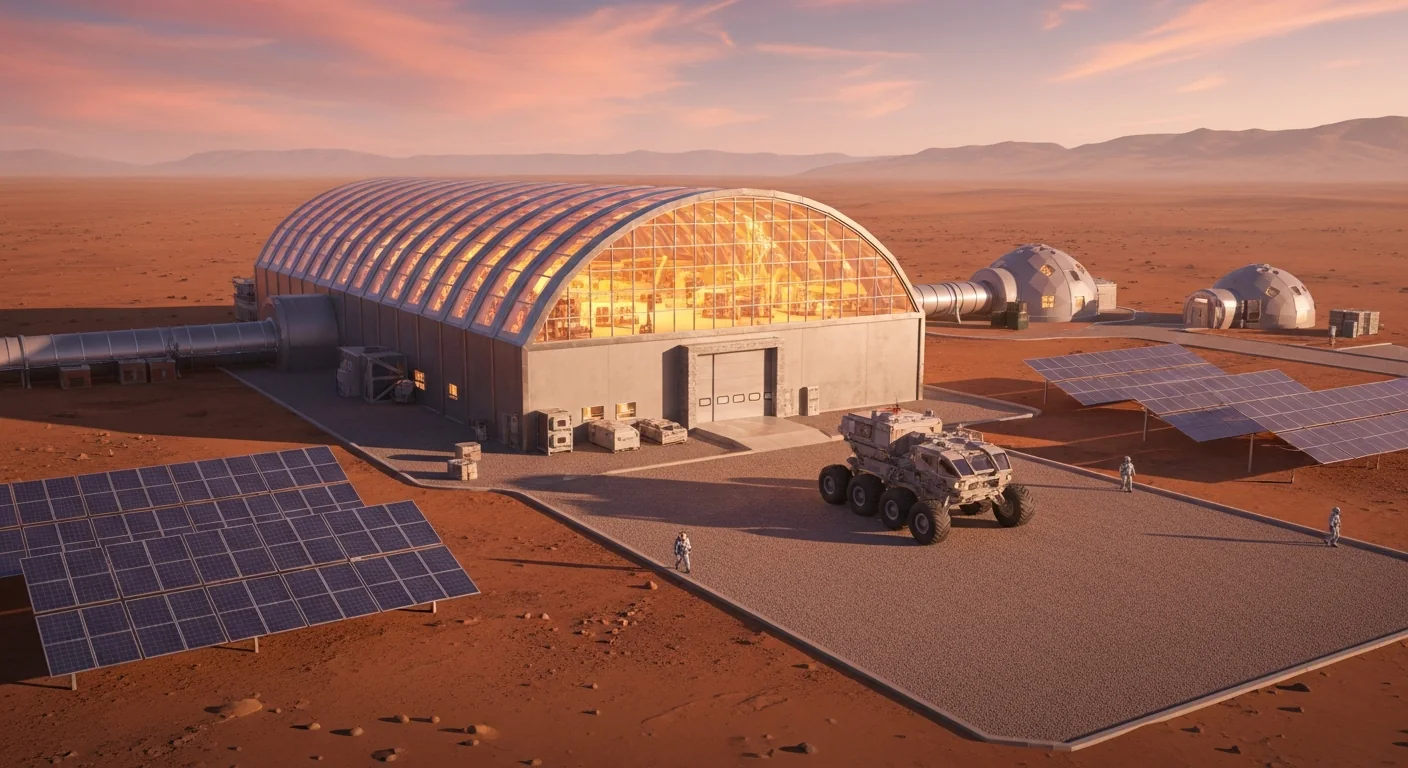
You can't ship a civilization across forty million miles. This is how the first settlers will raise electricity from fission and sun, mine buried ice into water, air and rocket fuel, build radiation shielding out of the ground, and refine the regolith into metal — the real machines, the real chemistry, and the strict order it has to happen in.
Drones on Mars · survey flight
Powered flight on another world is already real: NASA's Ingenuity flew 72 times. This is the engineering of how — oversized blades spun five times faster, surviving −90 °C nights, flying themselves with no GPS and a 20-minute radio delay — the next-generation aircraft now in development, and why a drone is the natural survey instrument of a Martian claim.
Mars-native manufacturing
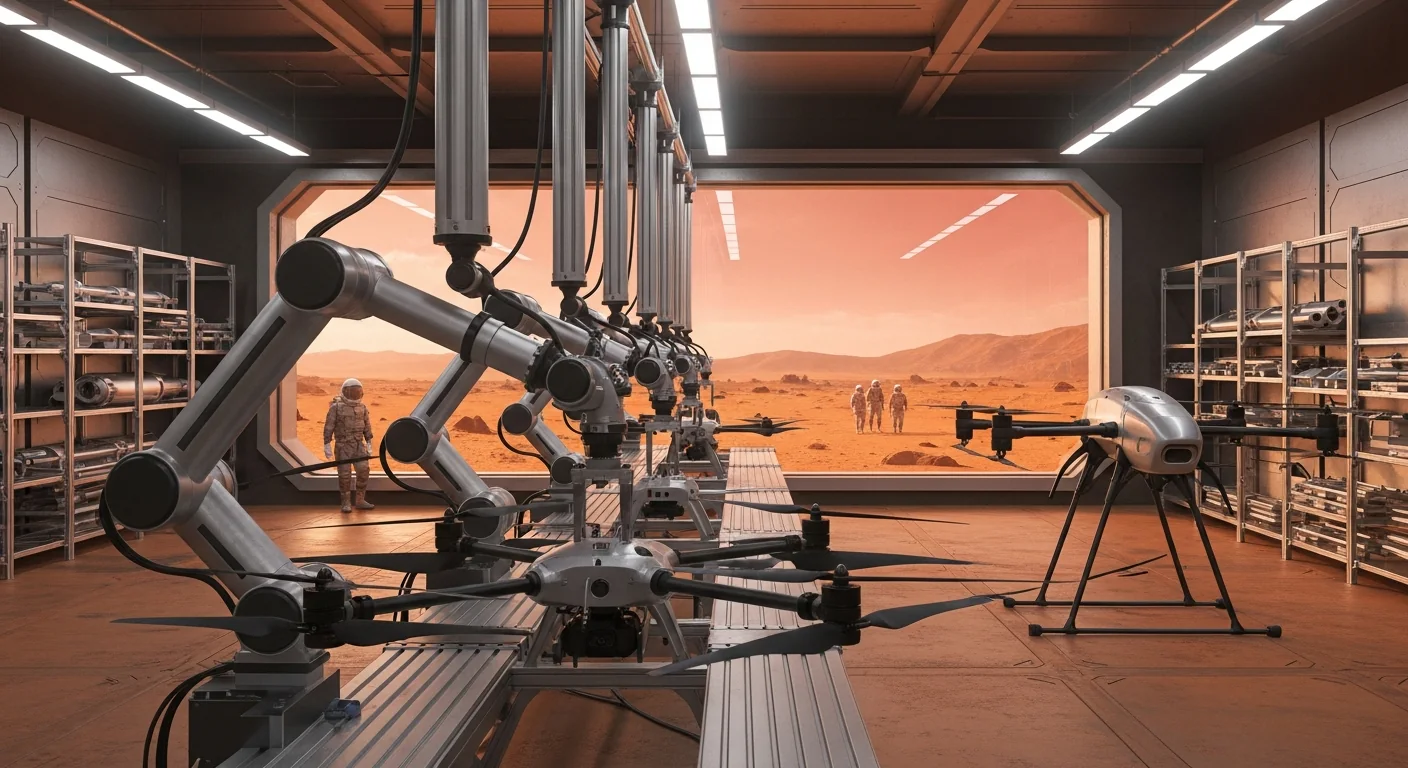
Every machine on Mars today was made on Earth. That cannot last — a 26-month launch window makes a shipping-dependent colony fragile. This is how Mars builds its own machines: what the planet's soil contains, what molten oxide electrolysis produces, what the first locally-assembled drone looks like, and the realistic 50-year roadmap to manufacturing independence.
How “squatter's rights” became a respectable doctrine in nearly every legal system on Earth — and why continuity of possession is the whole game.
Read the deep dive →What the 1967 treaty actually forbids, what it leaves open, and why “no national appropriation” is not the same as “no claims allowed.”
Read the deep dive →Our growing atlas of Martian ground — water, power, pressure and landing — region by region.
Read the Mars guide →That is the entire idea behind Red Homestead: not a novelty deed, but a timestamped, surveyed, publicly-published, continuously-maintained possession file — the modern descendant of the homestead file and the usucapião dossier.
Survey Mars & stake a parcel → See how the process worksNo conveyance of legal title. The 1967 Outer Space Treaty (Art. II) bars national appropriation of celestial bodies, and no sovereign, court, or land registry currently has jurisdiction to grant or enforce private title to land on the Moon, Mars, or any celestial body. Red Homestead does not and cannot convey legal ownership or any presently-enforceable property right.
What you purchase. A claim-documentation and registry service — the preparation, notarization support, public publication, opposition-period adjudication, and continuous-possession recordkeeping of a good-faith homestead claim — together with a collectible certificate. It is a record of your claim and intent, not a title.
Not an investment; not a security. Your payment is not an investment of money in a common enterprise and carries no expectation of profit from our efforts. We make no representation as to resale value, appreciation, or return. The claim is not offered as a security and is not registered with the SEC, any state regulator, the Brazilian CVM, or any other authority.
No guarantee of recognition; no sovereignty; not legal advice. We model the process on frameworks in which documented good-faith possession was sometimes later recognized, but we do not guarantee any authority will ever recognize your claim. No Red Homestead claim asserts national sovereignty. Nothing here is legal, tax, or financial advice.